Here’s a question most people don’t think to ask until they’ve already ruined something.
You pull out a silk blouse, a structured abaya, or an embroidered kandura. You reach for the iron. And somewhere between the wrong temperature setting and a moment of distraction, the fabric scorches, flattens, or picks up a water stain it didn’t have before.
The iron did what it always does. The problem is that what it does isn’t always what your wardrobe needs.
This comparison breaks down the real differences between the Jeroma Steamer and a traditional iron not in theory, but in the practical, daily context of getting dressed in the UAE. By the end, you’ll know which one belongs in your home.
Explore the Jeroma LuftPro Steamer at jeroma.ae
Table of Contents
- How Each Device Actually Works
- Jeroma Steamer vs Traditional Iron — The Key Differences
- Which Fabrics Does Each Handle Better?
- The Practical Reality — Daily Use in UAE Homes
- When a Traditional Iron Still Makes Sense
- Why the Jeroma Steamer Wins for Most UAE Households
- Key Takeaways
- FAQ
- Conclusion
How Each Device Actually Works
Understanding the core mechanism matters here because the difference isn’t just about design. It’s about what each device is actually doing to your fabric.
A traditional iron works through direct contact. A heated metal plate presses against the fabric surface, forcing fibers flat. Steam irons add moisture through small holes in the plate, which helps relax fibers slightly but the heat and pressure are still direct, still contact-based, and still happening simultaneously.
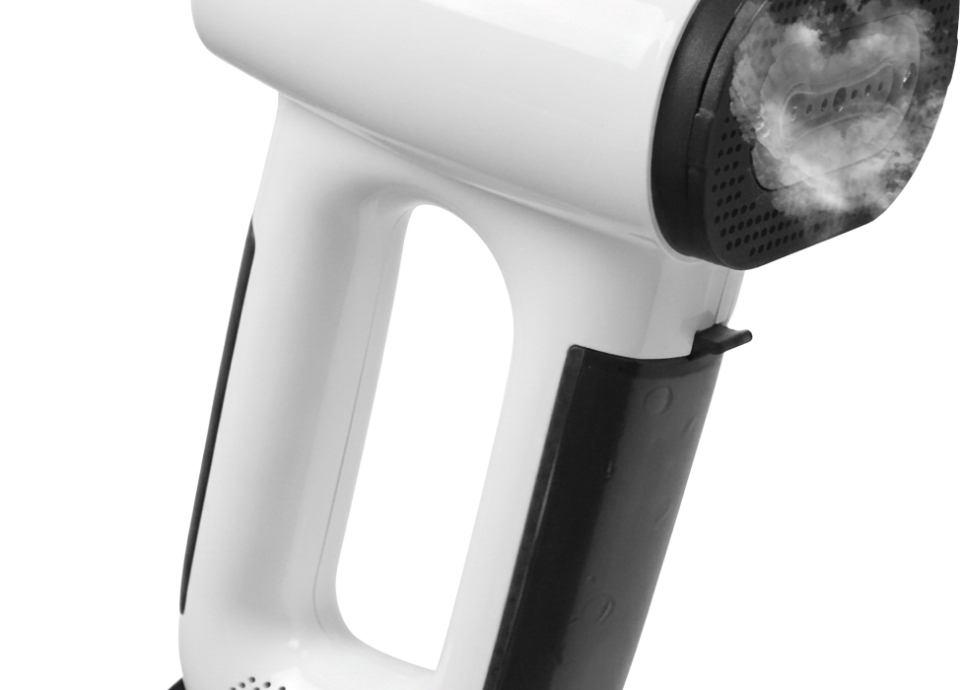
The Jeroma Steamer specifically the LuftPro works through a completely different principle. It converts water into steam and directs it into the fabric without making contact. The fibers absorb the heat and moisture from within and relax on their own. No pressing. No plate. No direct heat touching the surface.
That distinction contact versus non-contact is what drives almost every practical difference between the two.
Jeroma Steamer vs Traditional Iron — The Key Differences
| Feature | Traditional Iron | Jeroma LuftPro Steamer |
| Heat method | Direct contact — heated plate on fabric | Steam only — no plate contact |
| Safe on delicates | Risk of scorching or shine marks | Yes — no direct heat |
| Setup required | Board, flat surface, warm-up time | Handheld, ready in under 60 seconds |
| Works on hanging clothes | No — needs flat surface | Yes |
| Removes lint | No | Yes — built-in suction mode |
| Travel-friendly | No | Yes — compact and portable |
| Risk of fabric damage | Yes, particularly on silk and synthetics | Minimal |
| Storage | Bulky — needs board | Compact handheld device |
The LuftPro also adds something no traditional iron offers at all, a suction mode that pulls lint, dust, and surface debris off the fabric in the same pass. It’s not just a steamer. It’s a complete garment care device.
Which Fabrics Does Each Handle Better?
This is where the comparison gets practical fast.
Traditional irons perform reasonably well on heavy, flat fabrics like thick cotton shirts, denim, structured linen trousers. These materials can tolerate direct heat and benefit from the firm pressure. On the right settings, results are clean and sharp.
The problem starts when the wardrobe gets more varied.
Silk scorches easily under direct heat. Embroidered pieces can flatten and lose texture permanently. Synthetic blends like polyester and viscose have low heat tolerance — a setting that’s fine for cotton will damage them. Abayas with decorative elements, chiffon scarves, delicate kids’ clothing none of these are well-served by a traditional iron.
According to GINETEX international textile care labelling guidelines, steam treatment is specifically recommended over direct contact ironing for sensitive and decorative fabrics, because it allows fibers to relax without the mechanical stress of pressure and heat combined.
The Jeroma Steamer handles the full wardrobe range. Heavy fabrics respond to steam just as well as to direct heat. Delicate fabrics respond better because there’s no risk of contact damage. The LuftPro doesn’t need you to think about temperature settings per fabric type. Point, steam, done.
See the full Jeroma LuftPro product details
The Practical Reality — Daily Use in UAE Homes
There’s a version of this comparison that lives in a product spec sheet. Then there’s the version that plays out at 7:30am when you’re trying to get out the door.
A traditional iron requires a board. If yours is stored in a cupboard which it usually is that’s two minutes before you’ve even started. Then warm-up time. Then pressing, section by section, on a flat surface. Then waiting for it to cool before you can pack it away safely. The whole process is built around a different pace of life.
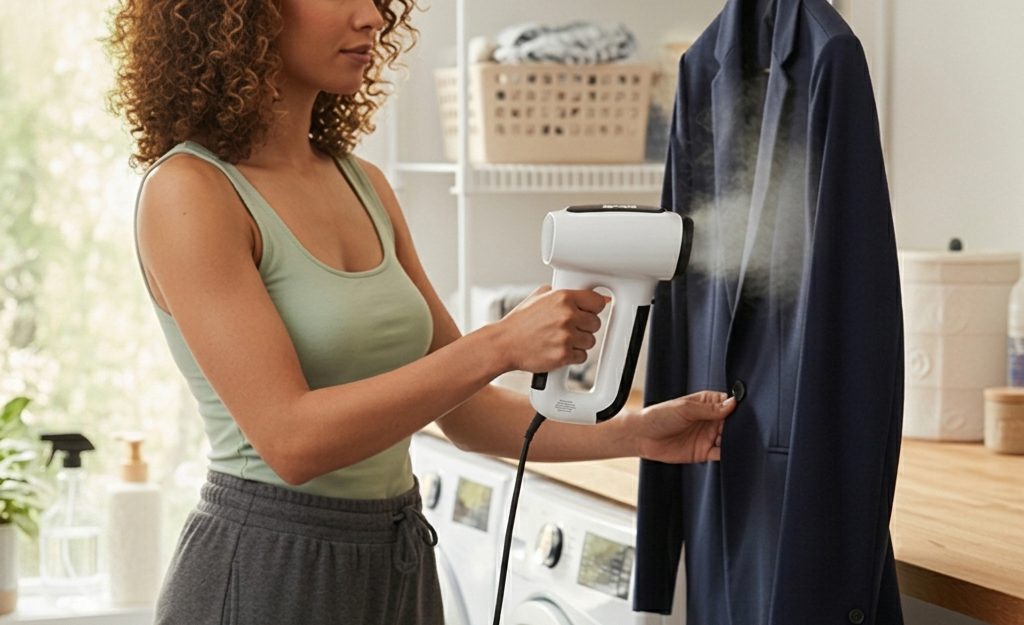
The Jeroma Steamer changes the sequence entirely. Take it off the shelf. Fill the water tank. It’s steaming in under a minute. Run it over the garment while it’s hanging. Put it back. That’s the whole thing.
For the UAE specifically, this matters more than in most places. Wardrobes here are genuinely mixed like professional office wear, traditional dress, modest fashion, sportswear, occasion clothing. Switching between these categories with a single iron means constantly adjusting settings, testing temperatures, and accepting some risk on anything delicate.
The LuftPro handles all of it the same way. No adjustments. No risk calibration.
When a Traditional Iron Still Makes Sense
This comparison isn’t about dismissing the iron entirely. There are situations where it remains the better tool.
Sharp creases on formal trousers or dress shirts the kind that require a defined fold are genuinely better achieved with a flat iron and board. Steam alone won’t create a pressed crease; it relaxes fabric rather than reshaping it.
Starched fabrics that need structure pressed in, heavy duty uniforms, and certain tailoring applications are also better served by direct heat and pressure.
If your wardrobe is predominantly heavy cotton formalwear and you regularly need sharp pressed lines, a traditional iron earns its place. But for most UAE households where the wardrobe is mixed, time is limited, and fabric variety is high it’s the exception, not the rule.
Why the Jeroma Steamer Wins for Most UAE Households
The Jeroma LuftPro wasn’t designed to win a comparison on paper. It was designed around how people actually use garment care devices in their daily lives.
Compact enough to keep on a shelf rather than in a cupboard. Fast enough to use with five minutes before leaving. Safe enough to use on any fabric without thinking twice. The suction mode adds lint removal which irons simply don’t offer making it genuinely more useful in a single pass.
Consumer Reports’ fabric care research consistently shows that steam-based garment care produces fewer instances of fabric damage across most fabric categories compared to traditional contact ironing, particularly for mixed-fabric and delicate wardrobes.
For a wardrobe that includes abayas, silk, linen, embroidered pieces, synthetic blends, and everyday cotton, the LuftPro covers everything. A traditional iron covers most of it — with caveats.
That’s the practical difference.
Key Takeaways
- Traditional irons use direct heat and pressure effective on heavy cotton but a risk on delicate, embroidered, and synthetic fabrics common in UAE wardrobes
- The Jeroma Steamer uses non-contact steam, making it safe across fabric types and significantly faster to set up and use daily
- The LuftPro’s built-in suction mode removes lint in the same pass — a function traditional irons don’t offer at all
Conclusion
The traditional iron has a defined role sharp crease, heavy cotton, structured formalwear. It does those things well. But it was never designed for the pace, the wardrobe variety, or the fabric range that most UAE households actually deal with daily.
The Jeroma Steamer fills that gap. Faster setup, broader fabric compatibility, built-in lint removal, and none of the risk that comes with pressing direct heat onto delicate or embroidered pieces.
For most homes, it doesn’t replace the iron in every scenario. It just handles the scenarios the iron was never good at which, it turns out, is most of them.
Shop the Jeroma LuftPro Steamer at jeroma.ae
FAQ
Is a steamer better than an iron for everyday use?
For most people, yes. A steamer removes wrinkles without direct contact, works on hanging garments, and is faster to set up. Traditional irons have the edge only for creating sharp pressed creases on heavy formalwear.
Can the Jeroma Steamer handle thick fabrics like cotton and linen?
Yes. Steam penetrates thick fabric fibers effectively. For heavy cotton and linen, the LuftPro produces results comparable to a traditional iron without the setup time or risk of scorching.
Will it damage silk or delicate embroidery?
No. Because the LuftPro doesn’t make direct contact with the fabric, there’s no risk of heat scorching or pressure flattening. It’s one of the safest options for delicate UAE wardrobe pieces.
What does the suction mode actually do?
It removes surface lint, dust, and loose fibers from the garment. Think of it as a fabric refresh function particularly useful for dark fabrics that show lint, or garments that have been stored for a while.
Can I use it while travelling?
Yes, it was built with travel in mind. Compact, handheld, and compatible with UAE and international voltage. Hotel irons are notoriously inconsistent; the LuftPro eliminates that problem entirely.
Where can I buy the Jeroma Steamer in the UAE?
It’s available at jeroma.ae and on Sharaf DG Marketplace. UAE delivery, in stock now.