Add a slush and ice cream machine could be a nice addition to the café. However, they might be skeptical for about its ROI (Return over investment)
A proper return on investment (ROI) calculation helps cafe owners look beyond the purchase price. You need to consider the machine’s cost, ingredient expenses, selling prices, daily sales, electricity consumption, maintenance, and the additional revenue generated by frozen desserts and drinks.
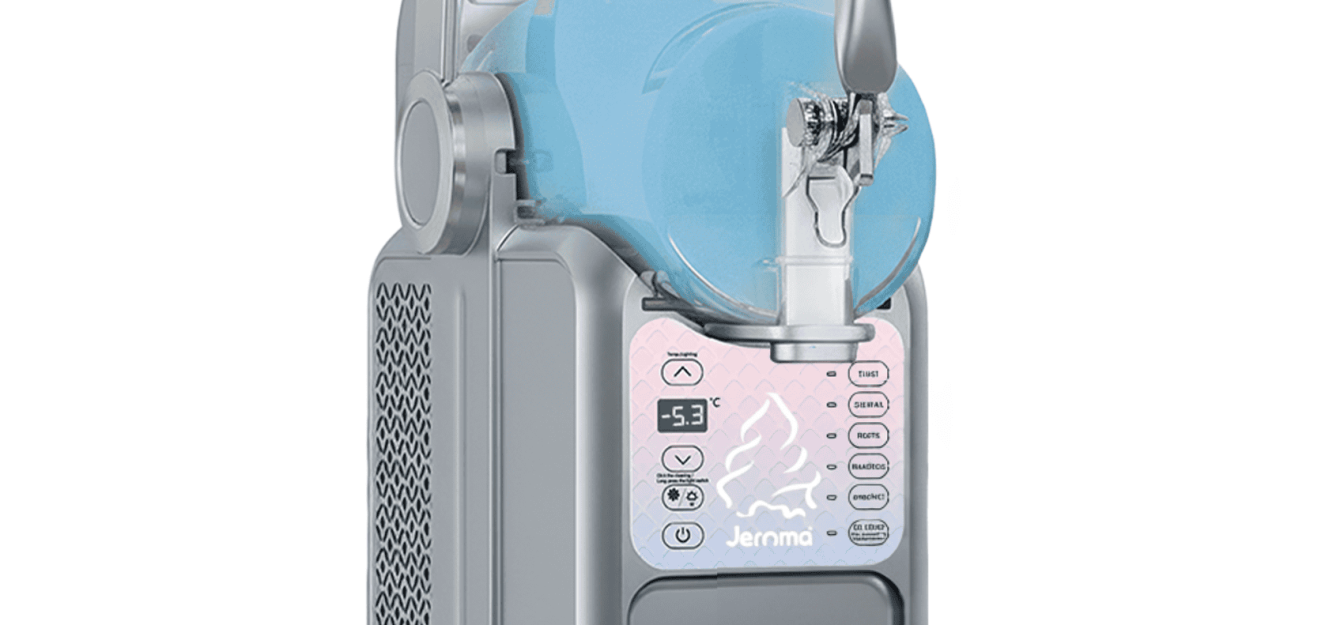
For cafes looking for a versatile option, the Jeroma ICEY 6-in-1 Ice Cream and Slush Machine combines six functions in one unit: ice cream, slush, smoothies, milkshakes, frappes, and frozen drinks. The machine has a 2.6-litre capacity, automatic compressor cooling, a 200W compressor, and one-touch digital programs.
Here’s how to calculate whether an investment in a slush and ice cream machine makes financial sense for your cafe.
What Is ROI for a Slush and Ice Cream Machine?
ROI measures how much profit an investment generates compared with its initial cost.
A simple formula is:
ROI = (Net Profit ÷ Investment Cost) × 100
For a cafe machine, however, it’s often more useful to calculate monthly net profit and payback period.
The payback formula is:
Payback Period = Machine Cost ÷ Monthly Additional Profit
For example, if a machine costs AED 899 and generates AED 450 in additional monthly profit:
AED 899 ÷ AED 450 = approximately 2 months
This means the machine could theoretically recover its purchase cost in about two months.
Actual results will depend on your menu prices, sales volume, ingredient costs, operating hours, and other business expenses.
Step 1: Calculate the Total Machine Investment
Start with more than the sticker price.
Your initial investment may include:
- Machine purchase price
- Delivery costs
- Installation, if required
- Additional serving cups and spoons
- Initial ingredients
- Syrups, fruit, dairy, or dessert mixes
- Marketing and promotional costs
- Any accessories required for operation
The current listed price of the Jeroma ICEY is AED 899, reduced from AED 1,099 on its product page. It also includes a one-year official warranty.
For a simple example, suppose your total initial investment looks like this:
| Cost | Example |
| Machine | AED 899 |
| Initial ingredients | AED 150 |
| Cups and serving supplies | AED 100 |
| Initial promotion | AED 100 |
| Total Investment | AED 1,249 |
This gives you a more realistic starting point than calculating ROI using the machine price alone.
Step 2: Estimate Your Selling Price
Next, determine how much customers will pay for your frozen products.
For example, your cafe might sell:
| Product | Example Selling Price |
| Slush | AED 15 |
| Ice cream cup | AED 18 |
| Milkshake | AED 22 |
| Frappe | AED 20 |
| Smoothie | AED 18 |
Don’t simply choose the highest possible price. Check your existing menu, competitors, customer expectations, portion size, and ingredient quality.
Your goal is to establish a selling price that provides a healthy margin while remaining attractive to your customers.
Step 3: Calculate the Cost Per Serving
Revenue isn’t profit. If you sell a slush for AED 15 but spend AED 5 on ingredients, packaging, and other variable costs, your gross contribution is:
AED 15 − AED 5 = AED 10 per serving
Your cost per serving should account for:
- Fruit or beverage base
- Ice cream mix or dairy
- Syrups
- Sugar
- Toppings
- Cups
- Straws
- Spoons
- Other disposable packaging
Electricity should also be considered when calculating your operating costs.
The Jeroma ICEY has a listed power rating of 200W and uses automatic compressor cooling, so electricity consumption can be estimated from your actual operating time and local electricity rate rather than simply treating the machine’s wattage as a direct daily cost.
Step 4: Estimate Daily Sales
This is where your ROI calculation becomes practical.
Let’s say your cafe sells:
- 15 slushes per day
- 8 ice cream servings per day
- 5 milkshakes per day
- 4 frappes per day
That’s:
32 frozen products per day
Now suppose your average contribution after ingredients and packaging is AED 8 per serving.
Your estimated daily contribution would be:
32 × AED 8 = AED 256
Over 26 operating days:
AED 256 × 26 = AED 6,656 per month
This doesn’t mean AED 6,656 is your final profit. You still need to account for electricity, additional labor, wastage, maintenance, promotions, and other incremental expenses.
The example simply shows why sales volume matters more than the machine’s purchase price alone.
Step 5: Calculate Your Monthly Net Profit
Now subtract the additional monthly operating expenses.
For example:
| Monthly Item | Example |
| Gross contribution | AED 6,656 |
| Electricity | AED 50 |
| Additional ingredients/wastage | AED 300 |
| Additional labor | AED 500 |
| Marketing | AED 200 |
| Maintenance allowance | AED 100 |
| Estimated net contribution | AED 5,506 |
Your actual figures could be considerably different. The important thing is to use your cafe’s real numbers rather than relying on generic assumptions.
Step 6: Calculate the Break-Even Point
Break-even tells you how many servings you need to sell before recovering your investment.
Use this formula:
Break-Even Servings = Total Investment ÷ Contribution Per Serving
Suppose your total initial investment is AED 1,249 and your average contribution is AED 8 per serving:
AED 1,249 ÷ AED 8 = approximately 156 servings
So you’d need to sell around 156 servings to recover the initial investment under these assumptions.
If your cafe sells 10 qualifying servings per day:
156 ÷ 10 = approximately 16 days
Again, this is an illustrative calculation, not a guaranteed payback period.
Step 7: Calculate the Monthly ROI
Once you know your monthly net profit, calculate your ROI.
Suppose your initial investment is AED 1,249 and your machine generates AED 1,500 in net incremental profit during the first month.
Your first-month ROI would be:
(AED 1,500 ÷ AED 1,249) × 100 = approximately 120%
If the machine continues generating similar profit, the investment has already recovered its initial cost and is producing additional returns.
For long-term analysis, it’s better to calculate ROI over 6 or 12 months rather than focusing only on the first month.
Don’t Forget the Value of a Multi-Function Machine
A major factor in calculating ROI is how many products one machine allows you to sell.
A machine dedicated exclusively to one frozen product may generate revenue from a single menu category. A multi-function machine can potentially support several.
The Jeroma ICEY is designed with six preset functions:
- Ice cream
- Slush
- Smoothies
- Milkshakes
- Frappes
- Frozen drinks
The manufacturer also lists a 2.6-litre capacity, built-in dispensing tap, removable parts for cleaning, and automatic compressor cooling.
For a cafe, this flexibility can make the investment more useful because the machine can support different products throughout the day.
For example, you could promote frappes during the morning and afternoon, milkshakes during peak cafe hours, and slush or frozen drinks during warmer periods.
Is a Slush and Ice Cream Machine Worth It for Your Cafe?
The answer depends on whether you can generate enough incremental sales to justify the investment.
A machine is more likely to deliver a strong ROI when:
- Your cafe already has steady customer traffic.
- Customers frequently purchase cold drinks or desserts.
- You have enough counter space.
- Your menu supports frozen products.
- Your ingredient costs are controlled.
- Your staff can operate and clean the machine efficiently.
- You promote the products rather than simply placing the machine on the counter.
The Jeroma ICEY 6-in-1 can be particularly interesting for cafes that want several frozen menu categories from one machine. Its automatic compressor cooling eliminates the need for ice or pre-freezing, while its six preset programs allow cafes to offer different frozen products.
Key Takeaways
- Calculate ROI using profit, not revenue.
- Include ingredients, packaging, electricity, labor, waste, and marketing in your calculations.
- Determine your break-even number of servings before purchasing.
- Compare conservative, expected, and high-demand sales scenarios.
- Multi-function machines can create more opportunities for menu expansion.
- Bundles and seasonal promotions can increase average order value.
- Track actual sales and costs after installation to measure real ROI.
- The Jeroma ICEY offers six frozen-product functions, 2.6L capacity, automatic compressor cooling, and a 200W power rating.
FAQs
How do I calculate the ROI of a slush machine?
Calculate the additional profit generated by the machine, divide it by the total investment, and multiply by 100. For a more useful business decision, also calculate the break-even point and payback period.
How long does it take for a slush and ice cream machine to pay for itself?
There is no fixed timeframe. It depends on your purchase price, selling price, contribution margin, daily sales, operating costs, and customer demand.
Is a multi-function machine better for cafe ROI?
It can be, particularly when the cafe can sell several products from the same machine. A multi-function machine may help expand the menu without requiring separate equipment for every frozen product.
How can I increase the ROI of my ice cream machine?
Increase sales volume, control ingredient waste, optimize portion sizes, introduce premium toppings, create bundles, and promote seasonal frozen products.
Does electricity significantly affect the ROI calculation?
Electricity should be included, but its impact depends on operating hours, the machine’s power consumption, and your local electricity rate. The Jeroma ICEY is listed with a 200W power rating and automatic compressor cooling.
Why Jermoa ICEY could be better choice for cafe?
The Jeroma Icey comes as 6 functions in one machine. Cafe can use it for ice cream, slushes, smoothies, milkshakes, frappes, and frozen drink. Additionally, this comes 2.6L, capacity and many more features.